Floaters and flashes
Medical reviewer Mr Mohamed Mohyudin, Consultant Ophthalmic SurgeonArticle reviewed
About this review
The reviewer checked the version identified in this article’s review record.
References for this section: NHS — Floaters and flashes in the eyesNational Eye Institute - Floaters
Your next step →Floaters and flashes at a glance
- Part of the eye
- Vitreous gel and retina
- Related symptoms
- Treatment options
- Condition group
- Retina and optic nerve
What are floaters and flashes?
The vitreous is a clear gel. With age it liquefies and shrinks, casting shadows (floaters). When it pulls on the retina you may see a brief flash, especially in dim light. Go to emergency eye care straight away if you have a sudden swarm of new floaters, repeated new flashes, a dark curtain, or sudden vision loss — only an examination can rule out a retinal tear.
Posterior vitreous detachment (PVD) is very common after middle age. Most PVDs are benign, but the same pull can tear the retina at the same moment. That is why new symptoms need a dilated check, not a web self-test.
Diabetes, high myopia, previous surgery or injury raise the chance that a ‘floater’ is blood or a tear. Mention those facts at triage.
Posterior vitreous detachmentRetinal tearRetinal detachmentAre eye floaters dangerous?
How do I tell a nuisance floater from an emergency?
Stable floaters you have had for months or years, unchanged, are usually a nuisance. Timing decides urgency: hours to days of a new shower, new flashes, or a spreading shadow are the emergency pattern.
Patterns — still get examined if you are unsure
| Pattern | Usual meaning | Action |
|---|---|---|
| One or two old threads, unchanged for months | Often PVD or vitreous specks the brain has learned to ignore | Mention at the next routine test |
| Sudden cobweb or ring plus flashes | Often new PVD — must exclude a tear | Same-day dilated retinal exam |
| Shower of black dots, curtain, or sudden blur | Tear, detachment, or vitreous haemorrhage until proven otherwise | Emergency eye care now |
How are new floaters and flashes checked?
Dilating drops and a look at the far retina, sometimes with a contact lens on the eye. The check is uncomfortable in bright light, not usually painful. Most people are reassured. If a tear is found, laser or freezing can often seal it before detachment spreads. Detachment usually needs surgery.
Do not drive until the drops wear off. Do not assume an undilated ‘quick look’ was enough for new flashes.
When are flashes an emergency?Vitreous haemorrhageFlashes and floaters symptom guide
Can bothersome floaters be removed?
Usually observation is best. Vitrectomy can remove persistent floaters in selected people after counselling about surgical risk. Laser ‘floater treatment’ is not a casual cosmetic. The priority when symptoms are new is excluding a tear, not shopping for removal.
If you have diabetes and a sudden cloud of dark floaters, that can be blood in the gel — still an emergency, even if you already know you have retinopathy.
Explore the diagram
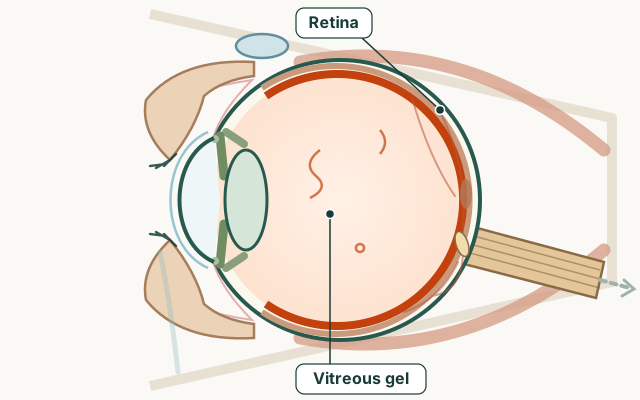
Clear vitreous gel fills much of the eye. Light passes through it to reach the retina.
Clumps in the vitreous can cast shadows called floaters. As the gel changes or separates, it may pull on the retina and cause flashes; an examination checks for a tear.
- Lens
- Retina
- Optic nerve
Simplified educational diagram. It does not show what every person sees or replace an eye examination.
Treatments & Surgery
Frequently asked questions
Are floaters normal?
Yes, especially after 50 and in short-sighted eyes. Stable long-standing floaters are usually harmless. New or suddenly increased floaters need urgent assessment.
What causes flashes of light?
Mechanical pull on the retina from vitreous movement — common in PVD. Migraine flashes are usually binocular zigzag patterns lasting minutes; retinal flashes are often brief and in one eye. New retinal-type flashes still need a dilated exam.
Can floaters be removed?
Usually no treatment is needed. Vitrectomy is reserved for selected bothersome cases because it carries surgical risk.
How do I know if I have a retinal detachment?
You cannot know from a website. Warning signs are a sudden floater increase, flashes, and a dark curtain. That is an emergency until examined.
Does diabetes increase floater risk?
Yes. Vitreous haemorrhage can cause sudden dark floaters. Report sudden changes the same day if you have diabetes.
Sources for this information
These references support the information on this page. Follow the linked source for its full context.