Lattice degeneration
Medical reviewer Mr Mohamed Mohyudin, Consultant Ophthalmic SurgeonArticle reviewed
About this review
The reviewer checked the version identified in this article’s review record.
Lattice degeneration at a glance
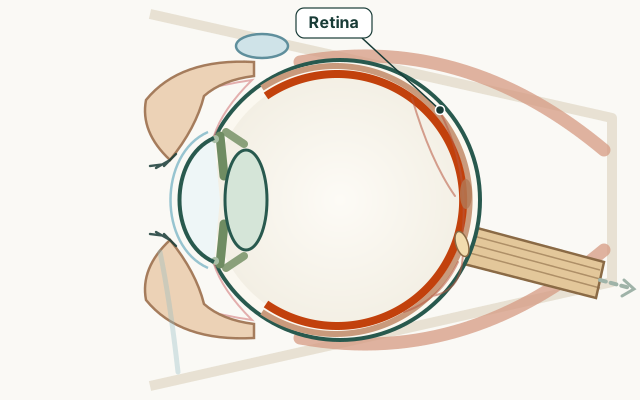
- Part of the eye
- Retina
- Common signs
- Usually no symptoms
- Discovered during dilated eye examination
- Important to report new flashes, floaters or shadows
- More common in short-sighted people
- Condition group
- Retina and optic nerve
- Medical code (ICD-10)
H35.4
What is lattice degeneration?
Lattice degeneration appears as fine white lines or patches at the edge of the retina where the tissue is thinner. It is not a disease you can feel, but an observation made when the back of the eye is examined.
Symptoms of lattice degeneration
Lattice degeneration itself causes no symptoms. It matters because it can occasionally predispose to retinal tears.
- Usually no symptoms
- Discovered during dilated eye examination
- Important to report new flashes, floaters or shadows
- More common in short-sighted people
Risk and monitoring
Most people never develop problems. Higher vigilance is sensible if you are very short-sighted, have a family history of retinal detachment, or have had an eye injury. New flashes or a curtain shadow need urgent assessment.
How is lattice degeneration treated?
No treatment is needed for lattice degeneration alone. If tears develop at its edge, laser or freezing treatment can seal them before detachment occurs. Regular eye checks help catch changes early in high-risk people.
Frequently asked questions
Is lattice degeneration serious?
Usually not. Most people have no problems, but it can increase retinal tear risk in some, especially with high short-sightedness. New flashes or shadows need urgent checks.
Does lattice degeneration need treatment?
The lattice itself does not need treatment. If a retinal tear forms, that tear is treated to prevent detachment.
How is lattice degeneration found?
It is usually seen during a dilated eye examination of the retina, often incidentally in otherwise healthy eyes.
Sources for this information
These references support the information on this page. Follow the linked source for its full context.