Nystagmus (involuntary eye movements)
Medical reviewer Mr Mohamed Mohyudin, Consultant Ophthalmic SurgeonArticle reviewed
About this review
The reviewer checked the version identified in this article’s review record.
Nystagmus at a glance
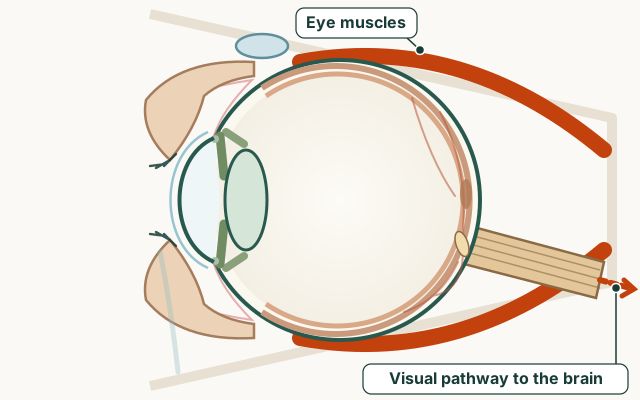
- Part of the eye
- Eye muscles and visual pathway to the brain
- Common signs
- Eyes that wobble or move on their own
- Reduced or blurred vision
- A head turn or tilt to find the steadiest 'null point'
- In acquired cases, a sense that the world is moving (oscillopsia)
- Condition group
- Retina and optic nerve
- Medical code (ICD-10)
H55
What is nystagmus?
Nystagmus is involuntary, rhythmic movement of the eyes, usually from side to side but sometimes up and down or in circles. Because the eyes cannot hold steady, it can reduce how clearly and steadily a person sees.
Symptoms of nystagmus
Effects vary widely between people.
- Eyes that wobble or move on their own
- Reduced or blurred vision
- A head turn or tilt to find the steadiest 'null point'
- In acquired cases, a sense that the world is moving (oscillopsia)
Causes and types
Early-onset (infantile) nystagmus appears in the first months of life and may occur on its own or with other eye conditions. Acquired nystagmus develops later and can be linked to neurological conditions, certain medicines, or inner-ear problems, so it always needs assessment.
Management
There is no simple cure for most nystagmus, but vision can be supported with the correct glasses, low-vision aids, and good lighting. Treating any underlying cause is important, and in selected cases surgery or medication can reduce the movement or improve a head posture.
Frequently asked questions
Can nystagmus be cured?
Most early-onset nystagmus is lifelong and cannot be fully cured, but vision can be supported with glasses and low-vision aids. Acquired nystagmus may improve if the underlying cause is treated.
What causes nystagmus?
Early-onset nystagmus often occurs on its own or with other eye conditions. Nystagmus that starts later in life can be linked to neurological or inner-ear problems and needs assessment.
Does nystagmus get worse?
Early-onset nystagmus is usually stable, though it can vary with tiredness or stress. New or worsening nystagmus in an adult should always be checked by a clinician.
Sources for this information
These references support the information on this page. Follow the linked source for its full context.