Amblyopia (lazy eye)
Medical reviewer Mr Mohamed Mohyudin, Consultant Ophthalmic SurgeonArticle reviewed
About this review
The reviewer checked the version identified in this article’s review record.
Amblyopia (lazy eye) at a glance
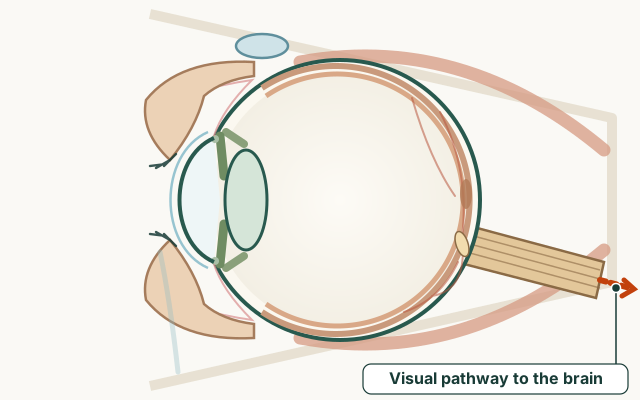
- Part of the eye
- Visual pathway to the brain
- Common signs
- Reduced vision in one eye
- An eye that turns in, out, up or down (a squint)
- Poor depth perception
- A child closing or covering one eye, or tilting their head
- Treatment options
- Condition group
- Eyelid conditions
- Medical code (ICD-10)
H53.0
What is amblyopia (lazy eye)?
Amblyopia develops when one eye sends a weaker image to the brain during early childhood, so the brain begins to favour the other eye and vision in the weaker eye does not develop fully. It is the most common cause of reduced vision in children.
Symptoms of amblyopia
There are often no obvious signs, which is why childhood vision screening is important.
- Reduced vision in one eye
- An eye that turns in, out, up or down (a squint)
- Poor depth perception
- A child closing or covering one eye, or tilting their head
What causes amblyopia, and who is at risk?
Amblyopia is usually caused by a squint, a large difference in the glasses prescription between the two eyes, or something blocking vision in one eye, such as a childhood cataract or droopy eyelid.
How is amblyopia treated?
Treatment first corrects any underlying problem, for example with glasses or treating a cataract. The weaker eye is then encouraged to work, usually by patching the stronger eye or using blurring drops in it. Results are best when treatment starts in early childhood.
Practical guides
Treatments & Surgery
Frequently asked questions
Can a lazy eye be corrected in adults?
Amblyopia responds best to treatment in early childhood while vision is still developing. Treatment in older children and adults is harder and less predictable, which is why early detection matters.
How is a lazy eye treated?
Treatment usually involves glasses to correct focus, then patching the stronger eye or using blurring drops in it to encourage the weaker eye to work.
Is a lazy eye the same as a squint?
No. A squint is when the eyes point in different directions, while amblyopia is reduced vision in one eye. A squint can cause amblyopia, but they are not the same thing.
Sources for this information
These references support the information on this page. Follow the linked source for its full context.