Age-related macular degeneration
Medical reviewer Mr Mohamed Mohyudin, Consultant Ophthalmic SurgeonArticle reviewed
About this review
The reviewer checked the version identified in this article’s review record.
References for this section: NHS — Age-related macular degenerationNational Eye Institute - Age-Related Macular Degeneration (AMD)
Your next step →Age-related macular degeneration at a glance
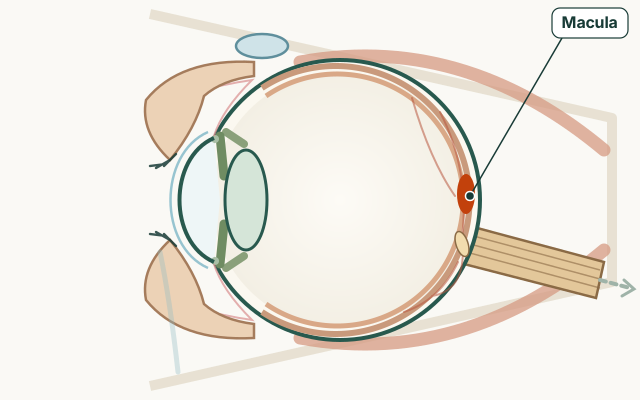
- Part of the eye
- Macula
- Common signs
- Typical: gradual central blur or need for brighter light
- Typical of wet AMD: new distortion or a rapid central grey patch
- Not typical: side-vision curtain, flashes with a floater shower — retinal emergency
- Not typical: painful red eye with nausea — think acute glaucoma until examined
- Treatment options
- Condition group
- Retina and optic nerve
- Medical code (ICD-10)
H35.3
What is age-related macular degeneration (AMD)?
The macula is the central patch of retina that gives sharp, colour, straight-ahead vision. AMD is common with age. It does not usually cause a painful red eye or a curtain from the side. Treat those patterns as emergencies until an eye professional has examined you.
Dry AMD involves thinning and waste deposits (drusen) under the retina. Wet AMD involves abnormal new vessels that leak fluid or blood. You can have dry AMD in both eyes, or wet in one eye and dry in the other.
We do not invent a percentage of people who ‘go blind’. Severe AMD can take central reading vision; most people keep enough side vision to walk around a familiar room. That is still life-changing. It is not the same as a cataract, which surgery can remove.
What are the symptoms of AMD?
Typical dry AMD: needing more light to read, words that look slightly washed, and a gradual difficulty with faces. Typical wet AMD: a sudden or rapidly worsening grey patch, distortion (straight lines looking bent), or a central blur in one eye. Not typical: a dark curtain from the edge, a painful red eye, or a sudden total black-out — treat those as emergencies.
- Typical: gradual central blur or need for brighter light
- Typical of wet AMD: new distortion or a rapid central grey patch
- Not typical: side-vision curtain, flashes with a floater shower — retinal emergency
- Not typical: painful red eye with nausea — think acute glaucoma until examined
Dry versus wet — goals of care, not a self-test
| Type | Usual pace | Usual first approach | What ‘urgent’ looks like |
|---|---|---|---|
| Dry (atrophic) | Months to years | Monitoring, smoking cessation, diet, sometimes AREDS2-style supplements if advised | Sudden new distortion — may have converted to wet |
| Wet (neovascular) | Days to weeks if untreated | Urgent clinic; anti-VEGF injections in many pathways | New central blur, distortion or a grey patch in one eye |
How is AMD diagnosed?
An eye professional examines the macula, often with dilated drops and OCT scans that show fluid or thinning. Fluorescein angiography is sometimes used for wet AMD. An Amsler grid can help you notice new distortion at home — it does not replace an examination, and a ‘normal’ grid does not rule out other emergencies.
If one eye is already poor, the other eye does more work. New symptoms in the ‘good’ eye are a reason to be seen promptly even if you have lived with dry AMD for years.
How is AMD treated?
There is no drop that reverses dry AMD. Stopping smoking is the most useful personal step we can name without inventing a risk percentage. A Mediterranean-style diet and green leafy vegetables are commonly advised; we do not sell supplements. AREDS2-type formulas are for selected intermediate dry AMD after a clinician confirms you fit the evidence — they are not recommended for everyone over 60.
Wet AMD is often treated with repeated anti-VEGF injections into the eye. The aim is to dry the leak and protect remaining central vision. How many injections you need is individual. We do not publish a clinic’s ‘success rate’.
Low-vision rehabilitation, brighter lighting, magnifiers and electronic aids help when central vision is already reduced. Cataract surgery can still help some people with AMD if the lens is also cloudy — that is a joint clinical decision, not a reason to skip macular treatment.
When is a macular change an emergency?
New distortion, a sudden central grey patch, or a rapid drop in reading vision in one eye needs urgent assessment the same day or as your local wet-AMD pathway instructs — do not wait for a routine six-month slot. A curtain of side vision, flashes with a shower of floaters, or sudden painless total loss is a different emergency again.
What does sudden vision loss mean?Are eye floaters dangerous?
Explore the diagram
The macula is a small area near the centre of the retina. It provides the detailed central vision used for reading and recognising faces.
Age-related macular degeneration affects the macula. Central details may become distorted or blurred; the pattern and progression vary between people.
- Lens
- Retina
- Optic nerve
Simplified educational diagram. It does not show what every person sees or replace an eye examination.
Practical guides
Treatments & Surgery
Frequently asked questions
Will I go completely blind with AMD?
AMD mainly affects central vision. Side vision is usually kept, so complete darkness is uncommon. Central loss can still stop reading and recognising faces.
Do glasses fix AMD?
Glasses cannot repair a damaged macula. Updated glasses and brighter light can still help remaining vision and any cataract.
Are injections painful?
The eye is numbed. Most people feel pressure more than sharp pain. Tell the team if you are very anxious — they can plan around that.
Should I take eye vitamins?
Only if a clinician has confirmed you fit the group studied in AREDS2-style evidence. Random high-dose vitamins are not a substitute for stopping smoking or for urgent wet-AMD care.
Is AMD the same as a cataract?
No. A cataract is a cloudy lens and can be replaced. AMD is retinal. You can have both. Surgery does not cure AMD.
Sources for this information
These references support the information on this page. Follow the linked source for its full context.