Macular hole
Medical reviewer Mr Mohamed Mohyudin, Consultant Ophthalmic SurgeonArticle reviewed
About this review
The reviewer checked the version identified in this article’s review record.
Macular hole at a glance
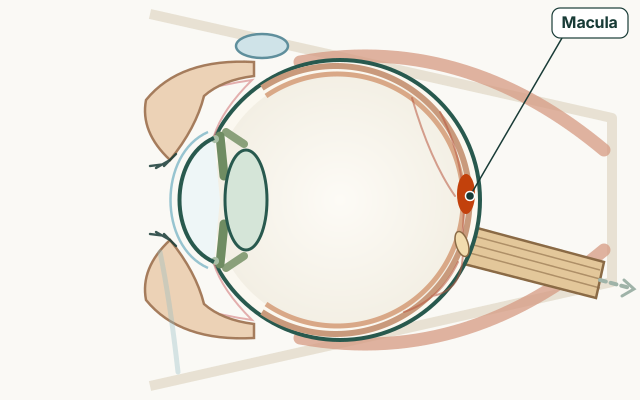
- Part of the eye
- Macula
- Common signs
- Blurred or missing central vision
- Straight lines looking bent or wavy
- A grey or blank patch in the centre
- Difficulty reading or seeing fine detail
- Treatment options
- Condition group
- Retina and optic nerve
- Medical code (ICD-10)
H35.3
What is a macular hole?
The macula provides detailed central vision for reading and faces. A macular hole is a full-thickness defect in this area, often developing when the vitreous gel pulls on the macula as it shrinks with age.
Symptoms of a macular hole
Symptoms usually develop gradually in one eye.
- Blurred or missing central vision
- Straight lines looking bent or wavy
- A grey or blank patch in the centre
- Difficulty reading or seeing fine detail
What causes a macular hole, and who is at risk?
Most macular holes are age-related and more common in women. Severe short-sightedness, eye injury and retinal detachment increase the risk. They are different from macular degeneration, though both affect central vision.
How is a macular hole treated?
Many macular holes are treated with vitrectomy surgery to close the hole and improve vision, especially when caught early. Without treatment, central vision often worsens. An OCT scan helps confirm the diagnosis and plan treatment.
Practical guides
Treatments & Surgery
Frequently asked questions
Is a macular hole the same as macular degeneration?
No. A macular hole is a physical gap in the central retina, often treated with surgery. Macular degeneration is a different condition involving gradual damage to the macula, usually managed without hole-closing surgery.
Can a macular hole heal on its own?
A small number of early holes can close without surgery, but many need vitrectomy for the best chance of vision improvement. Specialist assessment guides the decision.
How successful is macular hole surgery?
Surgery closes most holes and improves vision in many people, especially when treated early. Recovery takes weeks to months, and reading vision may continue improving over time.
Sources for this information
These references support the information on this page. Follow the linked source for its full context.