Dry eye disease
Medical reviewer Mr Mohamed Mohyudin, Consultant Ophthalmic SurgeonArticle reviewed
About this review
The reviewer checked the version identified in this article’s review record.
References for this section: NHS — Dry eyesNational Eye Institute - Dry Eye
Your next step →Dry eye at a glance
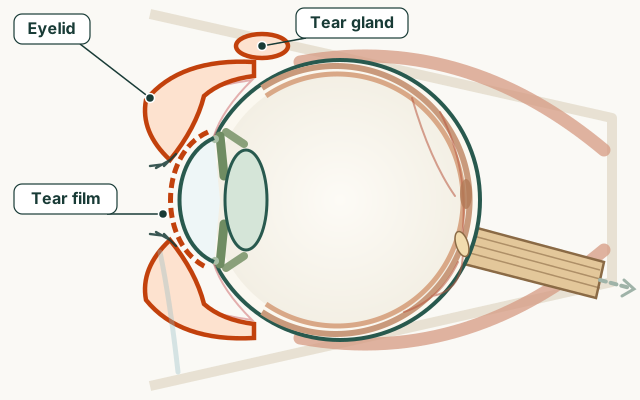
- Part of the eye
- Tear film, tear gland and eyelid
- Common signs
- Grit, burn or a sandy feeling
- Blur that clears after a blink
- Redness and tiredness worse with screens or wind
- Contact lenses that will not last the day
- Treatment options
- Condition group
- Cornea and front of eye
What is dry eye disease?
The tear film has mucin, watery tears and an oily lid layer that slows evaporation. Evaporative dry eye (often meibomian gland dysfunction and blepharitis) is common. Aqueous-deficient dry eye (age, some medicines, Sjögren’s) produces too little watery tear. Many people have a mix. Get urgent care instead for a chemical splash, a painful red eye in a contact-lens wearer, reduced vision, or sudden vision loss — these need examination, not another drop.
Screens reduce blink rate. Air-con, wind, contact lenses and antihistamines add evaporative stress. That overlap with digital eye strain does not mean dry eye is imaginary.
We do not rank lubricating-drop brands. Preservative-free bottles or unit-doses are often kinder if you dose often. Your pharmacist or clinician can match a drop to how you use your eyes.
BlepharitisMeibomian gland dysfunctionSjögren’s and the eyeDigital eye strain
What are the symptoms of dry eye, and why do dry eyes water?
Reflex tears can flood the surface yet still lack a stable oily layer, so they run down the cheek while grit remains. Watery eyes are therefore not proof that you ‘cannot have dry eye’.
- Grit, burn or a sandy feeling
- Blur that clears after a blink
- Redness and tiredness worse with screens or wind
- Contact lenses that will not last the day
- Symptoms worse later in the day
How is dry eye treated?
Start with frequent preservative-free lubricants, warm compresses and lid hygiene if the lids are involved, screen breaks with full blinks, and a humidifier if the air is dry. Step up to prescription anti-inflammatory drops, punctal plugs, or specialist procedures only after assessment.
Omega-3 is sometimes discussed; evidence is mixed and we do not prescribe a capsule dose here. Treat blepharitis properly before blaming ‘the wrong drop’.
Ladder — not a shopping order you must climb
| Step | Typical tools | Who it is often not for |
|---|---|---|
| Daily habit | Lubricants, blinks, 20-20-20, lid warmth if MGD | Chemical injury or a painful contact-lens red eye |
| Prescribed drops | Anti-inflammatory drops such as ciclosporin or lifitegrast where licensed | Anyone self-starting a steroid drop from an old bottle |
| Procedures | Punctal plugs, serum tears, specialist lid procedures | Untreated infection or an unexamined red eye |
When is a gritty eye an emergency?
Same-day care for severe pain, marked light sensitivity, reduced vision, a contact-lens wearer with a red eye, a white spot on the cornea, or symptoms after injury or welding without protection. Ordinary dry eye is annoying; a corneal ulcer is not ordinary dry eye.
Explore the diagram
A thin tear film covers the front of the eye. Blinking spreads it over the cornea to keep the surface comfortable and smooth.
Dry eye can develop when there are too few tears or the tear film breaks up too quickly. The surface may feel gritty or sore, and vision may fluctuate.
- Lens
- Retina
- Optic nerve
Simplified educational diagram. It does not show what every person sees or replace an eye examination.
Practical guides
Treatments & Surgery
Frequently asked questions
Are dry eyes curable?
Usually managed rather than cured. Many people control flares with drops, lid care and environment changes; prescriptions help moderate to severe disease.
Can screens cause dry eye?
They contribute. Concentration reduces blink rate. Conscious full blinks and breaks help; they do not treat a corneal infection.
Should I stop contact lenses?
During a painful red eye, yes. For chronic dryness, a practitioner may switch you to daily disposables or a different material after examining the surface.
Do punctal plugs help?
They can help selected aqueous-deficient eyes by slowing drainage. They are not first-line for untreated blepharitis.
Is this the same as Sjögren’s?
Sjögren’s is one cause of aqueous-deficient dry eye, often with a dry mouth. Most dry eye is not Sjögren’s. Do not self-diagnose from this page.
Sources for this information
These references support the information on this page. Follow the linked source for its full context.