Presbyopia (age-related long-sightedness)
Medical reviewer Mr Mohamed Mohyudin, Consultant Ophthalmic SurgeonArticle reviewed
About this review
The reviewer checked the version identified in this article’s review record.
Presbyopia at a glance
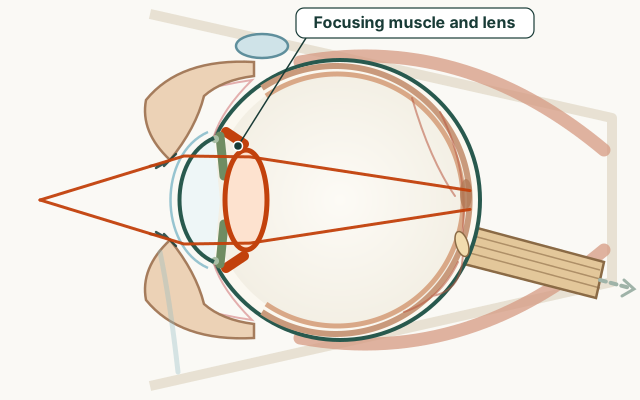
- Part of the eye
- Focusing muscle and lens
- Common signs
- Difficulty reading small print or your phone
- Holding books or screens further away to see clearly
- Eye strain or headaches after close work
- Needing brighter light for reading
- Treatment options
- Condition group
- Cornea and front of eye
- Medical code (ICD-10)
H52.4
What is presbyopia?
Presbyopia happens as the lens inside the eye gradually becomes less flexible with age, making it harder to focus on near objects. It affects almost everyone eventually and usually becomes noticeable from the mid-40s onwards.
Symptoms of presbyopia
Symptoms relate to close-up tasks and are often worse when tired or in dim light.
- Difficulty reading small print or your phone
- Holding books or screens further away to see clearly
- Eye strain or headaches after close work
- Needing brighter light for reading
What causes presbyopia, and who is at risk?
Presbyopia is caused by natural age-related stiffening of the lens. It is a normal part of ageing and happens to everyone, regardless of whether you were short- or long-sighted before.
How is presbyopia treated?
Reading glasses are the simplest fix. Varifocal or bifocal glasses help if you also need distance correction, and multifocal contact lenses are an option. Lens-based surgery may be considered for some people. Regular eye tests keep your prescription accurate as it changes.
Treatments & Surgery
Frequently asked questions
Is presbyopia normal?
Yes. Presbyopia is a normal part of ageing that affects nearly everyone from around the mid-40s, and it is not a sign of eye disease.
Can presbyopia be prevented?
It cannot be prevented because it is part of natural ageing, but it is easily corrected with reading glasses, varifocals, contact lenses, or surgery.
Is presbyopia the same as long-sightedness?
They are different. Presbyopia is the age-related loss of near focus, while long-sightedness (hyperopia) is a focusing error related to the shape of the eye that can occur at any age.
Sources for this information
These references support the information on this page. Follow the linked source for its full context.