Astigmatism
Medical reviewer Mr Mohamed Mohyudin, Consultant Ophthalmic SurgeonArticle reviewed
About this review
The reviewer checked the version identified in this article’s review record.
Astigmatism at a glance
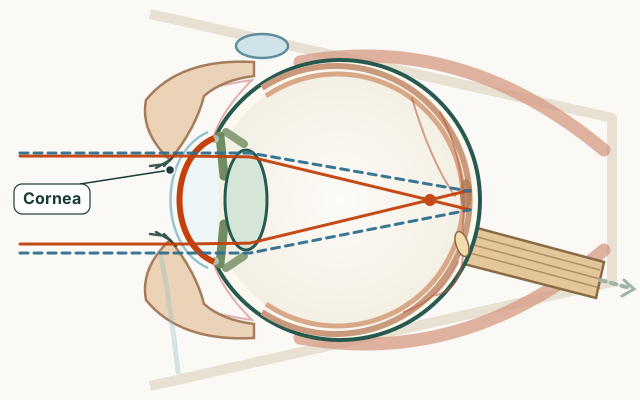
- Part of the eye
- Cornea
- Common signs
- Blurred or distorted vision at all distances
- Eye strain or discomfort
- Headaches
- Squinting to try to see clearly, and worse vision at night
- Treatment options
- Condition group
- Cornea and front of eye
- Medical code (ICD-10)
H52.2
What is astigmatism?
In astigmatism, the cornea or lens is curved more in one direction than another, so light does not focus to a single point on the retina. This causes blurred or distorted vision at both near and far distances. It often occurs alongside short- or long-sightedness.
Symptoms of astigmatism
Symptoms are often mild but can cause tiredness.
- Blurred or distorted vision at all distances
- Eye strain or discomfort
- Headaches
- Squinting to try to see clearly, and worse vision at night
What causes astigmatism, and who is at risk?
Astigmatism is usually due to the natural shape of the cornea or lens and is often present from birth. It can run in families and may change gradually over time.
How is astigmatism treated?
Astigmatism is corrected with glasses, with special toric contact lenses, or with laser refractive surgery for suitable adults. Regular eye tests make sure your correction stays accurate as it can change.
Treatments & Surgery
Frequently asked questions
Is astigmatism serious?
Astigmatism is a common and treatable focusing problem, not an eye disease. It does not usually threaten your sight and is easily corrected.
Can astigmatism be corrected?
Yes. Glasses, toric contact lenses, and laser surgery can all correct astigmatism. Your optometrist can advise which suits you best.
Does astigmatism get worse over time?
It can change slowly over the years, so regular eye tests help keep your glasses or contact lens prescription up to date.
Sources for this information
These references support the information on this page. Follow the linked source for its full context.