Scleritis
Medical reviewer Mr Mohamed Mohyudin, Consultant Ophthalmic SurgeonArticle reviewed
About this review
The reviewer checked the version identified in this article’s review record.
Scleritis at a glance
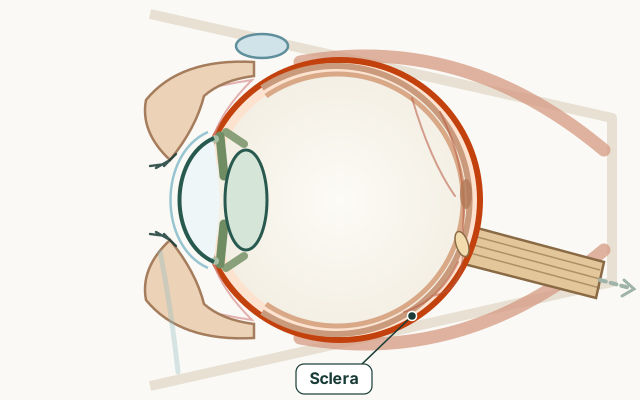
- Part of the eye
- Sclera
- Common signs
- Severe, deep, aching eye pain, often waking you at night
- Pain that may spread to the brow, jaw or face
- Redness with a bluish or violet tinge to the white of the eye
- Watering, light sensitivity, and sometimes reduced vision
- Condition group
- Retina and optic nerve
- Medical code (ICD-10)
H15.0
What is scleritis?
Scleritis is inflammation of the sclera, the tough white coat of the eye. It is less common but more serious than episcleritis, which affects only the thin surface layer, and it can damage the eye if untreated.
Symptoms of scleritis
Pain is the key feature that sets scleritis apart.
- Severe, deep, aching eye pain, often waking you at night
- Pain that may spread to the brow, jaw or face
- Redness with a bluish or violet tinge to the white of the eye
- Watering, light sensitivity, and sometimes reduced vision
Causes and links
Around half of cases are linked to an underlying autoimmune or inflammatory condition such as rheumatoid arthritis. Less often it follows infection or eye surgery, and sometimes no cause is found.
Treatment and urgency
Scleritis needs prompt assessment. Treatment usually involves anti-inflammatory medicines taken by mouth, and more severe cases may need stronger immune-modifying treatment, often shared with a rheumatologist. Because it can threaten sight and signal disease elsewhere, it should not be ignored.
Practical guides
Frequently asked questions
How is scleritis different from episcleritis?
Episcleritis is a common, mild inflammation of the surface layer that is often painless and settles on its own. Scleritis is deeper, much more painful, and can threaten vision, so it needs prompt treatment.
Is scleritis linked to other diseases?
Often, yes. About half of cases are associated with an autoimmune condition such as rheumatoid arthritis, which is why investigation of the rest of the body may be needed.
Is scleritis serious?
It can be. Scleritis causes significant pain and can damage the eye and vision if untreated, so a painful red eye that is deep and persistent needs prompt assessment.
Sources for this information
These references support the information on this page. Follow the linked source for its full context.