Charles Bonnet syndrome
Medical reviewer Mr Mohamed Mohyudin, Consultant Ophthalmic SurgeonArticle reviewed
About this review
The reviewer checked the version identified in this article’s review record.
Charles Bonnet syndrome at a glance
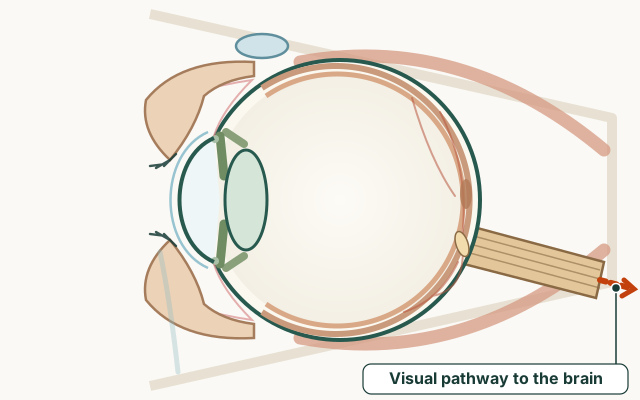
- Part of the eye
- Visual pathway to the brain
- Condition group
- Retina and optic nerve
What is Charles Bonnet syndrome?
When the brain receives less visual input from damaged eyes, it may fill in missing information with spontaneous images. This is similar to phantom limb sensations after amputation. Charles Bonnet syndrome is surprisingly common in people with severe sight loss but is often under-recognised.
Common features
Hallucinations are only visual — there are no voices or beliefs that others cannot see.
- Seeing people, animals, faces or patterns that are not there
- Images may be still or moving, black-and-white or coloured
- Usually no interaction with the hallucination
- Person understands the images are not real
- Often worse in low light, quiet periods or when alone
Causes and links
It is linked to significant vision loss from any cause, including macular degeneration, glaucoma, diabetic eye disease, stroke affecting vision, or cataracts before surgery. Better lighting, social contact and treating eye disease where possible may reduce episodes.
What helps
Explaining the condition often reduces fear. Eye movement, brighter lighting, distraction, and talking to family or low-vision services help many people. If hallucinations are distressing or insight is lost, medical review is needed to exclude other causes.
Practical guides
Frequently asked questions
Is Charles Bonnet syndrome a sign of dementia?
Usually no. People typically know the images are not real and have no other hallucinations or confusion. However, if insight is lost or behaviour changes, medical review is important.
What triggers visual hallucinations in poor sight?
Reduced visual input to the brain is the main trigger. Episodes may be worse in dim light, at rest, or after recent vision loss.
Can Charles Bonnet syndrome be treated?
There is no single cure, but explaining the condition, improving lighting, treating reversible eye disease, and low-vision support reduce distress. Specialist advice helps if episodes are frequent or frightening.
Sources for this information
These references support the information on this page. Follow the linked source for its full context.