Keratoconus
Medical reviewer Mr Mohamed Mohyudin, Consultant Ophthalmic SurgeonArticle reviewed
About this review
The reviewer checked the version identified in this article’s review record.
Keratoconus at a glance
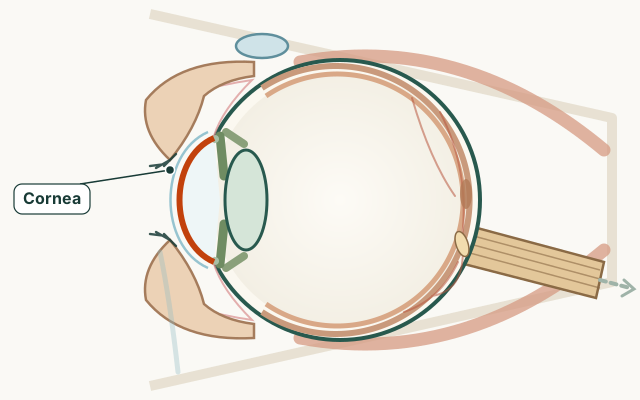
- Part of the eye
- Cornea
- Common signs
- Blurred or distorted vision
- Increasing short-sightedness and astigmatism
- Glare and halos around lights, especially at night
- Frequent changes to your glasses prescription
- Treatment options
- Condition group
- Cornea and front of eye
- Medical code (ICD-10)
H18.6
What is keratoconus?
In keratoconus, the cornea becomes thinner and bulges forward into an irregular cone shape. This distorts the way light enters the eye, causing increasingly blurred and distorted vision. It often progresses slowly over years and usually affects both eyes.
Symptoms of keratoconus
Symptoms often begin in the teens or early twenties.
- Blurred or distorted vision
- Increasing short-sightedness and astigmatism
- Glare and halos around lights, especially at night
- Frequent changes to your glasses prescription
What causes keratoconus, and who is at risk?
The exact cause is unclear, but it is linked to vigorous eye rubbing, a family history, allergies and conditions involving frequent eye rubbing. Avoiding rubbing the eyes is an important part of protecting the cornea.
How is keratoconus treated?
Early keratoconus can be corrected with glasses or soft contact lenses. As it advances, special rigid or specialist contact lenses give clearer vision. Corneal cross-linking can strengthen the cornea and slow or stop progression, and a corneal transplant may be needed in advanced cases.
Treatments & Surgery
Frequently asked questions
Can keratoconus be cured?
There is no cure, but treatment manages it well. Lenses correct vision, and corneal cross-linking can slow or halt progression, especially when started early.
Does rubbing your eyes cause keratoconus?
Vigorous eye rubbing is strongly linked to keratoconus and can make it worse, so avoiding rubbing is an important part of protecting your eyes.
Will I need a corneal transplant?
Most people do not. Lenses and cross-linking manage many cases, and a transplant is usually only considered for advanced keratoconus that other treatments cannot correct.
Sources for this information
These references support the information on this page. Follow the linked source for its full context.