Droopy eyelid (ptosis)
Medical reviewer Mr Mohamed Mohyudin, Consultant Ophthalmic SurgeonArticle reviewed
About this review
The reviewer checked the version identified in this article’s review record.
Droopy eyelid (ptosis) at a glance
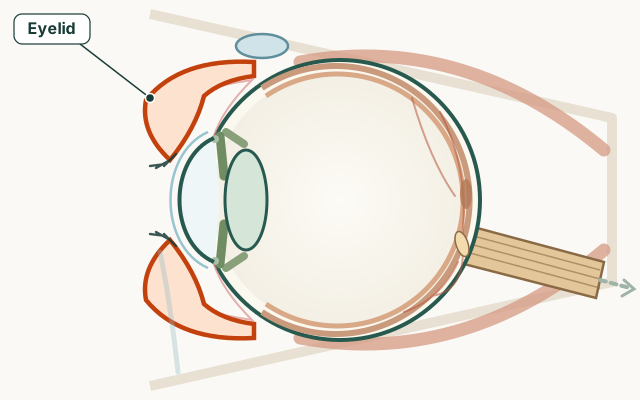
- Part of the eye
- Eyelid
- Common signs
- One or both upper eyelids sitting low
- A reduced upper field of vision
- Aching brows from lifting the lids
- Tilting the head back or raising the eyebrows to see
- Treatment options
- Condition group
- Eyelid conditions
- Medical code (ICD-10)
H02.4
What is a droopy eyelid (ptosis)?
Ptosis is when the upper eyelid sits lower than normal and can partly cover the eye. It may be mild or, if severe, block part of your vision. It can be present from birth or, far more commonly, develop gradually with age.
Symptoms of a droopy eyelid
Symptoms relate to the drooping lid and to compensating for it.
- One or both upper eyelids sitting low
- A reduced upper field of vision
- Aching brows from lifting the lids
- Tilting the head back or raising the eyebrows to see
What causes a droopy eyelid, and who is at risk?
The most common cause is age-related stretching of the muscle that lifts the eyelid. It can also be present from birth, follow eye surgery, or, less often, be linked to a nerve or muscle condition.
When to seek care and treatment
See a clinician urgently if a droopy eyelid comes on suddenly, especially with double vision, a severe headache, a change in the pupil size, or weakness elsewhere, as this can rarely signal a serious problem. Long-standing ptosis that affects vision or appearance can be corrected with surgery to lift the lid.
Treatments & Surgery
Frequently asked questions
What causes a droopy eyelid?
Most droopy eyelids are due to age-related stretching of the eyelid muscle. Less commonly they are present from birth or linked to a nerve or muscle condition.
When is a droopy eyelid serious?
A sudden droop, especially with double vision, a severe headache, a changed pupil, or weakness, needs urgent assessment, as it can occasionally signal a serious underlying problem.
Can a droopy eyelid be fixed?
Yes. When it affects vision or appearance, ptosis can be corrected with a minor operation to tighten or reposition the muscle that lifts the eyelid.
Sources for this information
These references support the information on this page. Follow the linked source for its full context.